
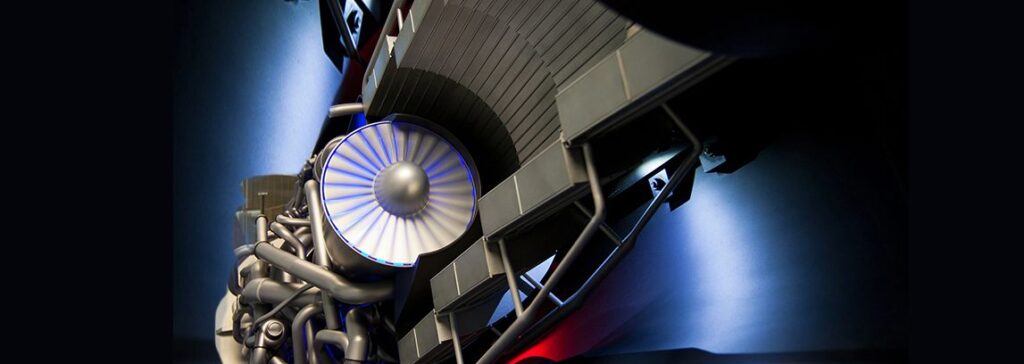
How one of our first startups attracted £100 million in investment and has transformed the capabilities of rocket engines.
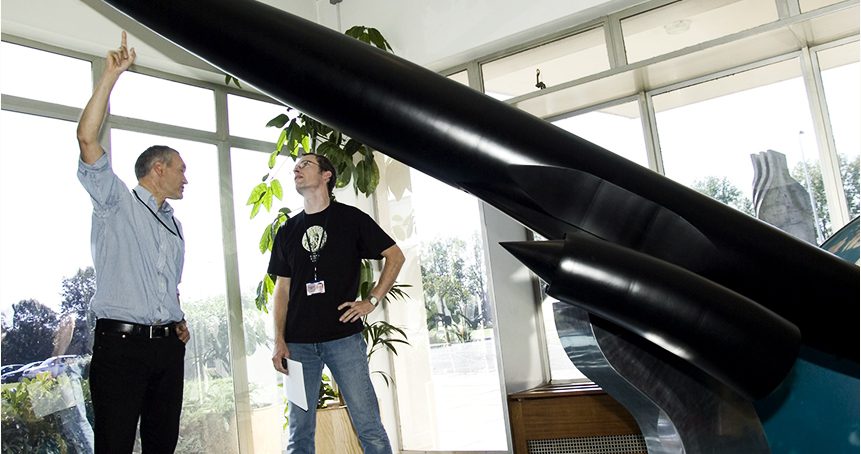
We became the centre of the aeronautical world in February when news broke of Reaction Engine’s staggering plans for a hypersonic passenger plane. The project plans mean travel from northern Europe to Australia could be completed in less than five hours. The design for a futuristic A2 plane, an aircraft that could carry passengers around the world at sustained speeds of Mach 5, is just one of a number of revolutionary projects that the team at Reaction Engines is currently exploring.
Reaction Engines began with humble beginnings, and moved into Culham Innovation Centre in 2001 with designs to grow and expand their already promising enterprise. The team greatly benefited from the proximity of the world’s largest fusion experimental facility, Joint European Torus (JET), as well as Culham’s specially designed Technical Support Package available through the UK’s Atomic Energy Authority (UKAEA). In addition, the flexibility and bespoke nature of our centre’s work spaces enabled Reaction Engines’ success.

“We feel fully vindicated with that decision to move to Culham Innovation Centre all those years ago, and we genuinely now see the centre as a partner in our development.”
Alan Bond, Director at Reaction Engines
Now as a graduated member of Culham Innovation Centre, Reaction Engines has gone on to achieve momentous success in the aeronautical sector. They recently received crucial development funding to build a ground-based demonstrator of its Sabre engine, that is designed to operate SKYLON, Reaction Engine’s revolutionary unpiloted space craft.